
Organooxygen compounds


Medchemexpress LLC Arg1-in-1 hydrochloride | 90.0% | C11H22BClN2O4 | 1 MG

ARG1-IN-1 hydrochloride is an orally active arginase inhibitor with an IC50 value of 29 nM. It can inhibit serum arginase activity and increase arginine levels in mouse tumor models, making it applicable for tumor research.
- Orally active arginase inhibitor.
- Inhibits serum arginase activity.
- Increases arginine levels in mouse tumor models.
- Applicable for tumor research.

Medchemexpress LLC Argonaute-2 inhibitor BCI-137 | 112170-24-8 | MFCD05148320 | 99.6% | 313.29 g/mol | C11H11N3O6S | 10 MM 1 ML
BCI-137 is a small-molecule competitive inhibitor of Argonaute 2 (AGO2) used to disrupt AGO2-miRNA interactions in biochemical and cellular research. It is supplied as a 10 mM solution in DMSO (1 mL).
- Inhibits AGO2 by competing with miRNA binding.
- Reported IC50 for AGO2 competition: 342 μM.
- Supplied as a 10 mM solution in DMSO, 1 mL volume.
- Molecular weight 313.29 g/mol; formula C11H11N3O6S.
- High purity (manufacturer listing ≈99.6%).
- Soluble in DMSO (100 mg/mL); example in vivo vehicle recipes provided.
- Recommended storage: powder -20°C; solutions -80°C.
Medchemexpress LLC 2-(2,3-dioxo-1,2,3,4-tetrahydroquinoxaline-6-sulfonamido) propanoic acid | 112170-24-8 | MFCD05148320 | 98.9% | 313.29 | C11H11N3O6S | 25 MG
BCI-137 is a competitive small-molecule inhibitor of Argonaute 2 (AGO2) that binds residues in the MID domain and inhibits AGO2 activity (reported IC50 342 μM). It is supplied as a white to off-white solid intended for research use.
- Competitive AGO2 inhibitor; IC50 342 μM.
- High purity solid (listed purity 98.88%).
- Molecular formula C11H11N3O6S; molecular weight 313.29 g·mol⁻¹.
- Storage: powder -20°C (3 years) or 4°C (2 years); in solvent -80°C (6 months) or -20°C (1 month).
- Supplied as a 25 mg package for laboratory research.
Medchemexpress LLC 3,6,9,12,15,18,21-Heptaoxatricosan-1-ol, 23-azido- | 352439-36-2 | 97.0% | C16H33N3O8 | 250 MG
Azide-PEG8-alcohol is a PEG-based PROTAC linker that functions as a click chemistry reagent with an Azide group. It participates in copper-catalyzed azide-alkyne cycloaddition (CuAAc) reactions with alkyne groups, and strain-promoted alkyne-azide cycloaddition (SPAAC) reactions with DBCO or BCN groups. This molecule is used in the synthesis of PROTACs, which harness the ubiquitin-proteasome system for selective protein degradation.
- Peg-based PROTAC linker
- Utilized in PROTAC synthesis
- Click chemistry reagent
- Features an Azide group
- Enables CuAAc reactions with alkyne groups
- Enables SPAAC reactions with DBCO or BCN groups
eMolecules 2923-96-8 | 4-Fluoro-2-nitro-benzaldehyde | J & W PharmLab LLC | MFCD01666439 | 169.111 | C7H4FNO3 | 96.000 | [O-][N+](=O)c1cc(F)ccc1C=O | 25g | 452541464
4-Fluoro-2-nitro-benzaldehyde | J & W PharmLab LLC | 2923-96-8 | MFCD01666439 | 169.111 | C7H4FNO3 | 96.000 | [O-][N+](=O)c1cc(F)ccc1C=O | 25g | 452541464
Medchemexpress LLC SRI-37330 hydrochloride | 2322245-49-6 | 99.7% | C16H20ClF3N4O2S | 25 MG
SRI-37330 hydrochloride is an orally bioavailable thioredoxin-interacting protein (TXNIP) inhibitor. It inhibits glucagon secretion and function, reduces hepatic glucose production, and reverses hepatic steatosis. This compound can be used for type 2 diabetes research.
- Inhibits activity of human TXNIP promoter in INS-1 cells.
- Decreases mRNA and protein levels of TXNIP in INS-1 cells.
- Inhibits polymerase II (Pol II) binding to the E-box motif region of the TXNIP promoter.
- Lowers glucagon secretion in TC1-6 cells.
- Inhibits glucagon-induced glucose output from primary hepatocytes.
- Decreases glucagon secretion and action in mice.
- Blocks hepatic glucose output in mice.
- Reverses obesity- and streptozotocin-induced diabetes and hepatic steatosis in mice.
- Well tolerated in male C57BL/6J mice.
Medchemexpress LLC Ginsenoside Rf | 52286-58-5 | 801.01 | 50 MG
Ginsenoside Rf is a trace component of ginseng root. It is a saponin that rapidly and reversibly inhibits N-type and other high-threshold Ca2+ channels in rat sensory neurons. It is suitable for various laboratory applications.
- Inhibits N-type Ca2+ channels
- Trace component of ginseng root
- Effect largely eliminated by pretreatment with pertussis toxin
- Inhibits Ca2+ channels in hybrid F-11 cell line
- Appears as a white to off-white solid
- Target: N-type calcium channel
- Produces dose-dependent antinociception in mice
- Soluble in DMSO and ethanol for in vitro applications
Medchemexpress LLC trans-Tranilast | 70806-55-2 | 99.0% | 327.34 | 1 ML
trans-Tranilast (trans-MK-341) is an anti-allergy agent utilized in studies of bronchial asthma, allergic rhinitis, and atopic dermatitis. It is suitable for laboratory centrifugation and storage.
- Anti-allergy agent
- Used in studies of bronchial asthma
- Used in studies of allergic rhinitis
- Used in studies of atopic dermatitis
Medchemexpress LLC Azido-PEG2-alcohol | 139115-90-5 | 99.5% | C4H9N3O2 | 250 MG
Azido-PEG2-alcohol is a PEG-based PROTAC linker used in the synthesis of PROTACs. It is a click chemistry reagent containing an Azide group, capable of undergoing copper-catalyzed azide-alkyne cycloaddition reaction (CuAAc) with molecules containing Alkyne groups. It can also undergo strain-promoted alkyne-azide cycloaddition (SPAAC) reactions with molecules containing DBCO or BCN groups.
- Peg-based PROTAC linker
- Used in the synthesis of PROTACs
- Click chemistry reagent
- Contains an azide group
- Undergoes copper-catalyzed azide-alkyne cycloaddition reaction (CuAAc) with alkyne groups
- Participates in strain-promoted alkyne-azide cycloaddition (SPAAC) reactions with DBCO or BCN groups
Medchemexpress LLC Clorgyline hydrochloride | 17780-75-5 | 99.9% | C13H16Cl3NO | 50 MG
Clorgyline hydrochloride is an irreversible and selective inhibitor of monoamine oxidase A (MAO-A) used in scientific research. It has minimal effect on conjugated dopamine (DA) amounts in superfusates of rat striatum slices. This compound contains an Alkyne group, enabling it to undergo copper-catalyzed azide-alkyne cycloaddition (CuAAc) with molecules containing Azide groups.
- Irreversible and selective inhibitor of monoamine oxidase A (MAO-A)
- Structurally related to Pargyline
- Contains an Alkyne group for copper-catalyzed azide-alkyne cycloaddition (CuAAc) with Azide groups
- Increases nicotine infusions and motivation to obtain nicotine in rats at 2 mg/kg daily for 28 days
- Pretreatment with 1 mg/kg intravenously for 1 hour has little effect on the efflux of conjugated dopamine (DA) and p-tyramine-evoked release of conjugated DA from slices of rat striatum
Medchemexpress LLC Azido-PEG10-alcohol | 877239-09-3 | 97.0% | C20H41N3O10 | 500 MG
Azido-PEG10-alcohol is a PEG-based PROTAC linker used in the synthesis of PROTACs. It functions as a click chemistry reagent due to its Azide group, enabling it to participate in various cycloaddition reactions. This product is for research use only.
- Click chemistry reagent
- Contains an Azide group
- Enables copper-catalyzed azide-alkyne cycloaddition (CuAAc) reactions
- Can participate in strain-promoted alkyne-azide cycloaddition (SPAAC) reactions
- Used in the synthesis of PROTACs
Medchemexpress LLC Azido-PEG2-alcohol | 139115-90-5 | 99.49% | C4H9N3O2 | 1 G
Azido-PEG2-alcohol | 139115-90-5 | 99.49% | C4H9N3O2 | 1 G
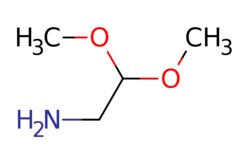
eMolecules 22483-09-6 | Aminoacetaldehyde dimethyl acetal | Combi-Blocks | MFCD00008135 | 105.137 | C4H11NO2 | 98.000 | COC(CN)OC | 100g | 205395284
Aminoacetaldehyde dimethyl acetal | Combi-Blocks | 22483-09-6 | MFCD00008135 | 105.137 | C4H11NO2 | 98.000 | COC(CN)OC | 100g | 205395284